

Growing Through Hardship
The Surprising Soil for Growth
When you open your Bible to Psalm 52, you’ll notice a small heading before verse one: “A Maskil of David, when Doeg the Edomite came and told Saul, ‘David has come to the house of Ahimelech.’” That little word maskil means “to give insight into a human problem from God’s perspective.” In other words, this psalm is not just an honest vent from David’s heart—it’s Spirit-breathed wisdom for our hearts that produces humility.
And the context? It’s gritty, raw, deeply human, and divinely gracious.
David, God’s anointed future king, is on the run. Saul, God’s currently anointed king, is jealous, insecure, and paranoid—and bent on killing him. David has just fled to the city of Nob, where the priest Ahimelech helps nourish him with bread from the holy place and outfits him with the sword of Goliath. Enter Doeg the Edomite, a foreigner, chief of Saul’s herdsmen, and likely someone David had worked alongside as a shepherd. Doeg sees all this, reports it to Saul, and becomes the betrayer whose treachery leads to the slaughter of 85 priests, plus the men, women, children, and animals of Nob.
This is the emotional soil out of which Psalm 52 grows. David is betrayed, hunted, and cut off from his family and the house of God—yet despite these dire circumstances, he declares,
“But I am like a green olive tree in the house of God;
I trust in the steadfast love of God forever and ever.”
How can David say that? How can you and I say that when (not if) we face difficulty? The answer is that growth is not determined by the climate above the ground, but by the root system below it. And while I honestly wish this were not the case, the ironic, paradoxical, and yet absolutely necessary soil for deep growth in the Lord is often found in difficulty, pain, and suffering.
While I honestly wish this were not the case, the ironic, paradoxical, and yet absolutely necessary soil for deep growth in the Lord is often found in difficulty, pain, and suffering.
The Olive Tree Analogy
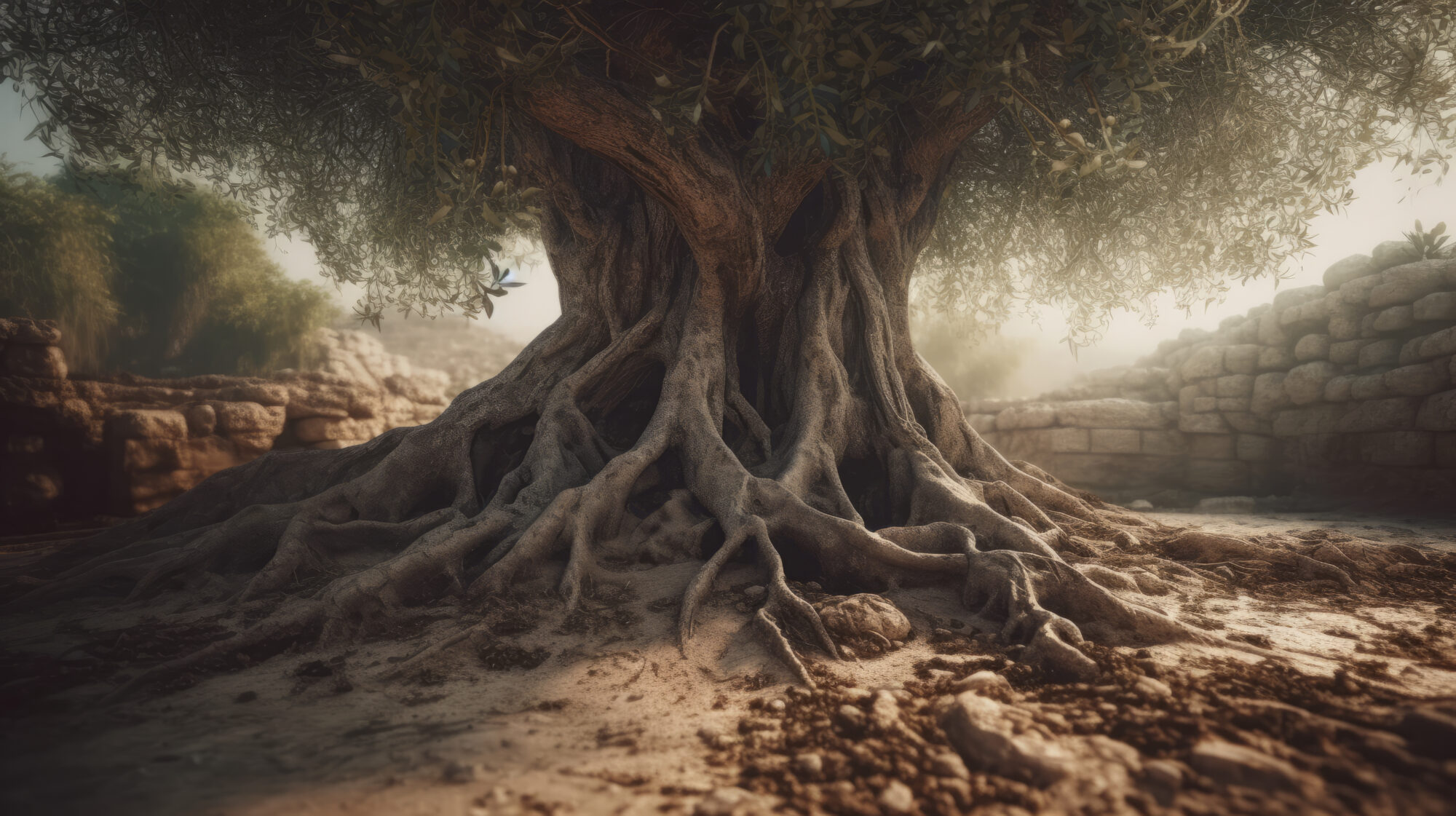
Notice first that David contrasts his circumstances with comparing himself to a green olive tree. Why a green olive tree? In Scripture, olive trees were a symbol of faithfulness and steadfastness. They grow in almost any condition—rocky soil, drought, intense heat, or cold. They are virtually indestructible; even if cut down or burned, new shoots spring from the roots. Some olive trees in Israel are over 2,000 years old and are still bearing fruit!
David is making this profound point: you can grow in any season, even the hard ones, if your roots are in the right place.
You can grow in any season, even the hard ones, if your roots are in the right place.
For David, that place was “the house of God”—not merely a building, but the reality of God’s holy presence. Even in the wilderness and separated from the physical house of the Lord, David knew that God was with him. As was true for David, the awareness of God’s presence is our only sustaining root system which can produce holy growth in the midst of hardship.
The awareness of God’s presence is our only sustaining root system which can produce holy growth in the midst of hardship.
From David’s words in Psalm 52, we see three “roots” that allowed him to grow through hardship—and they can anchor you and me in the same way.
1. Trust in the Steadfast Love of God
David’s confidence wasn’t in his military skill, his political connections, or his ability to outwit Saul. He says, “I trust in the steadfast love of God forever and ever.” The Hebrew word here for “trust” means to be confident, bold, and secure.
Our tendency is to interpret God’s love through the lens of our circumstances. But David flips the script and interprets his circumstances through the lens of God’s love.
Paul echoes this in Romans 8:39: “Nothing can separate us from the love of God in Christ Jesus our Lord.” That means God’s love isn’t just like a comfort blanket in hard times—it’s the vital root which produces the fruit of godly growth.
Times of trial reveal where our trust really lies. Doeg trusted in riches and the fleeting power of position; David trusted in the unfailing love of God. Doeg boasted in evil; David boasted in the goodness of God. Doeg would be uprooted; David would be rooted and flourishing.
If you’re struggling to trust God right now, ask Him for a fresh revelation of His love. Let His steadfast love—not the shifting sands of your circumstances—define your perspective.
2. Express Thanks and Praise to God
Trust supernaturally overflows into thanksgiving. In verse 9, David says, “I will thank you forever, because you have done it.” Notice that this is before God has changed his situation. David thanks God in advance, confident that He will act justly and faithfully.
It’s been said that gratitude in hardship isn’t denial of pain; it’s a declaration of divine perspective. David, in another psalm, said it this way: “I will praise the name of God with a song; I will magnify him with thanksgiving” (Psalm 69:30). Often our view of our problems and hardships is way too big, and our view of God is way too small. Thanksgiving magnifies God in our life so that we see just how big and awesome He is, and allows us to see our hardships, pain, and difficulty through our heavenly Father’s eyes.
Gratitude in hardship isn’t denial of pain; it’s a declaration of divine perspective.
This reality is further emphasized when the psalmist declares in Psalm 119:71, “It is good for me that I was afflicted, that I might learn your statutes.” What if you began to thank God for the hard things, not just the easy ones? That kind of thanksgiving produces resilient growth, just like the olive tree.
3. Wait Upon the Goodness of the Lord
Finally, David says he will “wait for your name, for it is good, in the presence of the godly.” Waiting is hard. In our culture, it feels like a waste of time. But in God’s kingdom, waiting is not passive; it’s a patient, expectant clinging to God’s unchanging character and promises.
In God’s kingdom, waiting is not passive; it’s a patient, expectant clinging to God’s unchanging character and promises.
David knew about waiting. Anointed as king in 1 Samuel 16, he didn’t actually take the throne until over a decade later. In between was a wilderness season full of danger, betrayal, and uncertainty.
Why the delay? Because what God does in us while we wait is just as important as what we’re waiting for. Waiting deepens dependence. Waiting prunes false hopes. Waiting grows roots.
What God does in us while we wait is just as important as what we’re waiting for.
Notice too—David waits “in the presence of the godly.” Isolation in hardship is dangerous. The enemy wants to separate you from God and His people; God wants to draw you deeper into both. Fellowship with others is part of how we remain steadfast while waiting.
Choosing to “Go Green”
When hard times come, our instinct is to escape rather than to embrace the intimacy the Lord wants to develop through those difficulties. David shows us another way—let hardship become holy ground for growth.
I once heard a pastor put it this way; when hard times come, choose to “Go Green.” That is, to “go green” spiritually—to take the trash life throws at you and, by God’s grace, turn it into fruitfulness. Maybe you have a “Doeg” in your life—someone who has betrayed you, spoken against you, or thrown you under the bus. You could become bitter. Or, like David, you could let God use that pain to produce deeper growth.
The Greater David
Psalm 52 ultimately points us beyond David to the Greater David—Jesus. David compared himself to a green olive tree in the House of God; Jesus surrendered Himself in a garden of olive trees, then was crushed on a tree for our salvation and to make us into the House of God.
In truth, we’ve all been like Doeg to God—loving evil more than good, trusting in ourselves rather than His love. Yet instead of uprooting us forever, God grafted us into His family through the cross, transforming us from being enemies into beloved children.
The olive tree offers one more lesson: its fruit must be crushed to produce oil, which was used in Scripture to anoint kings, prophets, and priests. Likewise, the crushing you endure may be God’s merciful olive press, His way of releasing something precious through you: His character, His presence, His love for others.
Jesus was crushed for our sake, and from His suffering came the greatest good. Your suffering, surrendered to Him, can produce fruit you never imagined—for your joy, for the good of others, and for the glory of God.
So, may you trust in His steadfast love forever and ever.
May you thank and praise Him in all circumstances.
And may you wait on Him, for His name is good.
Copyright © 2025 Justin Jeppesen. All rights reserved.
 Skip to content